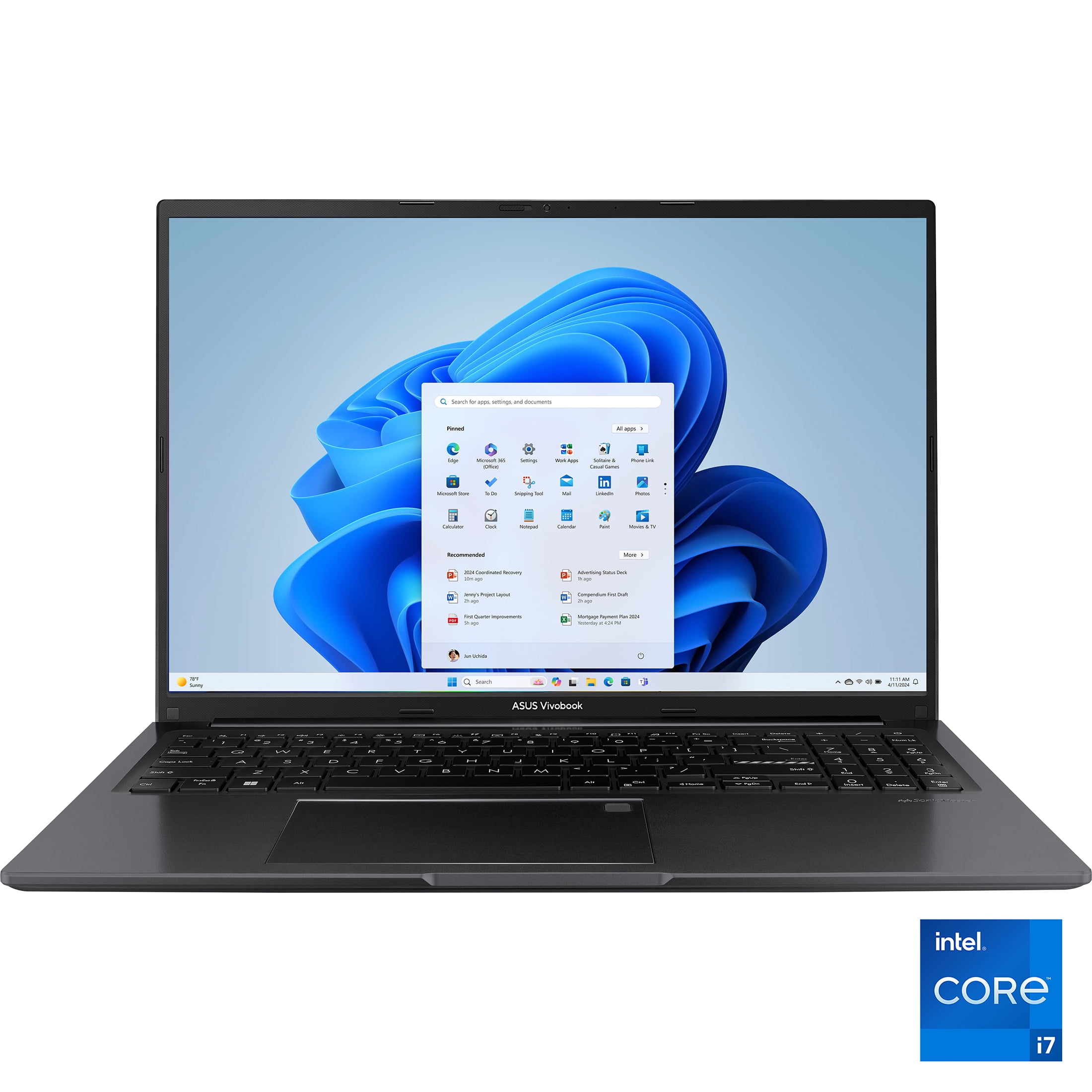
Finding a laptop that balances performance, a decent screen, and a reasonable price can feel like a quest. Today, Walmart has a contender that's worth a serious look. The ASUS Vivobook 16 is on offer, packing specs that are usually reserved for higher price tags, all for well under six hundred bucks. Let's break down what makes this deal interesting and who it's really for.
What You're Actually Getting for Your Money
At first glance, the star of the show is the Intel Core i7-1355U processor. This isn't some old, low-power chip; it's a modern 10-core CPU that can handle a surprising amount. Paired with 16GB of RAM, this combination means you can have dozens of browser tabs open, stream video, work on documents, and jump between apps without the system bogging down. The 512GB SSD is a good starting point for your OS, applications, and a solid library of files, and it'll make the whole system feel snappy.
The Screen and Real-World Use
The 16-inch WUXGA display is a highlight. The 1920x1200 resolution gives you a little extra vertical space compared to standard 1080p, which is fantastic for scrolling through documents or web pages. At 300 nits of brightness, it should be usable in most indoor settings. Just know it's a 60Hz panel, so it's geared for productivity and media consumption, not high-refresh-rate gaming.
- Great for: Office work, web browsing, writing, video calls, and watching movies.
- Not ideal for: Competitive esports or professional color-critical work.
Is This a Good Deal? Let's Talk Price
Pricing a laptop like this is tricky because the value is in the total package. Getting a current-gen i7 and 16GB of RAM at this price point is uncommon. You're often looking at older i5s or only 8GB of memory. Historically, configurations with these specs tend to hover closer to $700 or more, especially from major brands. At $589.98, this Vivobook sits in a sweet spot where it undercuts the competition while offering a very competent spec sheet for everyday use.
Who Should (and Shouldn't) Consider This Laptop
This isn't a gaming powerhouse or a mobile workstation, but it excels as a daily driver for specific users.
- A great fit for: Students, remote workers, general home users, and anyone who needs a reliable machine for multitasking, research, and entertainment.
- Think twice if: You need to run heavy video editing software, modern AAA games, or complex 3D modeling. The integrated Iris Xe graphics are fine for light gaming and video playback, but they have limits.
The Little Extras That Add Up
ASUS included some thoughtful features here. The 720p camera has a physical privacy shutter, which is a nice touch. You get modern WiFi 6E and Bluetooth 5.3 for connectivity. The port selection is generous, including USB-C and HDMI, so you likely won't need a dongle for your peripherals. The promise of up to 8 hours of battery life with fast charging support means it can realistically get you through a work or school day.
Bottom Line
- Strong core specs (i7, 16GB RAM) for the price make it a productivity standout.
- The 16-inch WUXGA screen offers a great balance of size and clarity for work and media.
- Excellent for everyday tasks, but integrated graphics limit it for serious gaming or pro creative work.
- At under $600, it represents notable value compared to similar configurations from other retailers.
Common Questions
Can this laptop handle light gaming?
Yes, but with clear expectations. The Intel Iris Xe graphics can manage older titles, indie games, and esports titles like League of Legends or Valorant at lower settings. Don't expect to play the latest graphically intensive games smoothly.
Is the RAM upgradeable?
Based on the specifications and typical Vivobook designs, the 16GB of RAM is likely soldered onto the motherboard and not user-upgradeable. The storage (SSD), however, can usually be replaced or upgraded if needed in the future.
What's the build quality like?
As a Vivobook, it's positioned as a value-oriented laptop. You can expect a plastic chassis that's functional and lightweight, but it won't have the premium feel of a metal ultrabook. For the price, the trade-off in materials for better internal specs is common and reasonable.
Comments (0)
No comments yet. Be the first to share your thoughts!
Leave a Comment